Collecting Fashion
By Marco Pecorari
Fashion as ephemeral artwork is daily narrated in temporary exhibitions. As hosting institutions, museums have started questioning the way they react to this new dimension within the museum. Collecting dress is already a duty of ethnographic and decorative arts museums. But at the same time, these institutions are conceiving dress as social testimony, or serial object. In these museological contexts, the dress is hardly ever contextualized in its visual process of creation that coincides with a representation of contemporary fashion. In order to explore this topic more in depth, we talked to the curator Amy de la Haye, the Director of the Museum at FIT Valerie Steele, the director of the Galleria del Costume, Caterina Chiarelli and with fashion designers, Agatha Ruiz de la Prada and Antonio Marras.
Marco Pecorari: First of all, thanks for participating. Let’s start with an ‘easy’ issue: what’s the difference between fashion and costume? fashion museum and costume museum?
Agatha Ruiz de la Prada: We had to face this issue with Madrid’s costume museum when we propose to call it ‘Costume Museum’ but I guess, a fashion museum should cover more than mechanics and elements of fashion, such as representing fashion’s relation to society.
Antonio Marras: In my opinion, the gap is huge. Costume is identified as obsolete, retro and not contemporary. Fashion is escaping from this. Wrongly. Personally I love visiting costume museums.
Caterina Chiarelli: I love costume museums, too. But I think we should delimit costume museum to an ethnographic field, based more on the study of dress as a tradition than on its changing nature.
Amy de la Haye: Traditionally collections of dress and fashion were generically described as ‘costume’, a term that could embrace different kind of dress. It was inclusive. Fashion and the museum were not paired explicitly until the early 1970s when the V&A (London) and the Costume Institute at the Met (New York) started to actively embrace contemporary fashion. However, the terminology of museum collections and institutions has only started to change very recently to more accurately reflect the type of garments housed/exhibited and, where appropriate, to reflect growing interests in fashion and attract wider audiences.


Agatha Ruiz de la Prada and Amy de la Hay
MP: so that’s also a commercial side…
Valerie Steele: Yes. But I use the word “fashion” rather than “costume” because I want to emphasize that even in the past, people wore fashion – not fancy-dress costumes. The word “costume” should be restricted to theatrical/film costume or folk costume. The Museum at the Fashion Institute of Technology (FIT) is a fashion museum – meaning that we look at fashion, not as “art” (like in an art museum, where they tend to focus just on haute couture) or “history” (like a history museum, where clothing is used to document or illustrate other aspects of the past) but as a legitimate type of design that has both artistic and historical elements – and that has its own history.
CC: Very true. In my opinion, a fashion museum should exhibit the changing of this type of design, with more freedom.
MP: What kind of restrictions could a fashion museum have?
VS: There are restrictions on conservation and exposition of dress, and also from fashion designers and the fashion system in general….
MP: What kind of links should we have between fashion museums and the fashion system?
ARP: A museum is a place for exhibiting art, creativity, whereas the fashion commercial machine has to deal with money and productions…
VS: I don’t agree… I think that a fashion museum is a part of the fashion system. Fashion designers know that the museum is a medium (like runway, the fashion magazine and the department store) that presents fashion to the public. Therefore, designers seek to control exhibitions of their work: here’s one restriction which doesn’t have to be accepted by curators.
MP: An example is the one with Lagerfeld and the Metropolitan Museum of Art, in which case Lagerfeld’s interference caused the exhibition to be cancelled
AM: I’m a fashion designer and I would never dare to interfere in the interpretation of my work. I would put my self in the curator’s hands. I would consider it an honour.
dlH: It’s understandable. Designers in turn recognize that having their work represented in a museum collection provides cultural cachet today and will ensure their place in history in the future. But it’s not only that. Sometimes there are amazing connections made. When he had just launched his own label in London, John Galliano studied an 18th century man’s coat in the collection and presented his interpretation to the Collection as a gift. When fashion looks to history, the Museum can become especially relevant.
AM: Definitely. “fashion people” have very little memory and they don’t look at the past as much as they should, and museums could help close this gap, if they could provide an easy access…
MP: Many museums are starting to catalogue on line their collections, which would make for a lot easier access and would also be helpful in terms of conservation.
AM: Great. I think it would also be important to create a close relation between fashion designers factories and museums, in order to catalogue the most significant clothes, which are being produced. Just think about what we could have done in Italy: from Albino or Capucci to the first Max Mara and Romeo Gigli…
CC: Sure, we should promote this collaboration but we need also to be careful to not get too involved. The museum could end up becoming a company’s archive.
MP: Could fashion museums represent the new step in museology or influence it? A new form of museum?
dlH: We have to say two things about this. First, as we have trends in fashion there are also trends in fashion curation and in curation in general. Fashion curation has to be analyzed because it can be seen as an important step for the role of curators in museum. Second, we have to underline that fashion is one of the most immediately accessible of all museum collections. When I worked at the V&A I used to say that you could find your way to the Dress Gallery (which at the time showed a chronology of western fashion) blindfolded as it was the noisiest – everyone, all ages and both genders, had something to say and felt confident to express an opinion.
Clothing of all types is inextricably entwined with our biographies and we leave imprints on the clothes we wear.
VS: It’s true, but I also think that it’s too soon to know what fashion museums will ultimately contribute to museology as a whole. But we must strive to move beyond designer hagiography and crowd-pleasing displays of “pretty” dresses worn by celebrities.
CC: I do believe that a fashion museum is inherently different and has great potentials for the future of museums. It is a dynamic museum.
Amy de la Haye is reader in Fashion Curation and Material Culture London College of Fashion.Joint Course Director (with Judith Clark) M.A. Fashion Curation, London College of Fashion. Formerly Curator of 20th Century Dress at the Victoria & Albert Museum (1991-1999). She will publish a book (co-curated with Judith Clark) on Curating Fashion for Yale University Press.
Valerie Steele Ph.D., (Yale University) is Director and Chief Curator of The Museum at the Fashion Institute of Technology (FIT)
Caterina Chiarelli is Director of the Galleria del Costume – Palazzo Pitti di Firenze.
Antonio Marras is the designer of his own brand Antonio Marras and Artistic Director of Maison Kenzo
Agatha Ruiz de la Prada is a Madrid-base fashion designer
Marco Pecorari is completing his Phd in Contemporary Fashion Theory at the Centre for Fashion Studies – Stockholm University – with a thesis entitled “The Show is not Enough: new trajectories for reading contemporary fashion”. He writes for several fashion, arts and cultural independent magazines.
(**content and photo from fashionprojects.org**)


 Justin Timberlake Looks Perfects Man
 Justin Timberlake Looks Handsome
 Justin Timberlake Sexy Pose
 Justin Timberlake Cute Smile
 Justin Timberlake Cool Pose
 Justin Timberlake Press Conferences
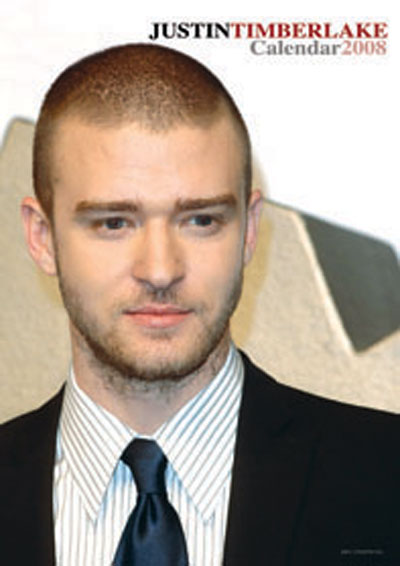 Justin Timberlake With Formal Clothes
 Justin Timberlake Sharpen Gaze